
Here’s a beginner-friendly Nutrition Guide to help you start making healthier food choices and building sustainable habits:
—
Nutrition for Beginners: A Simple Guide
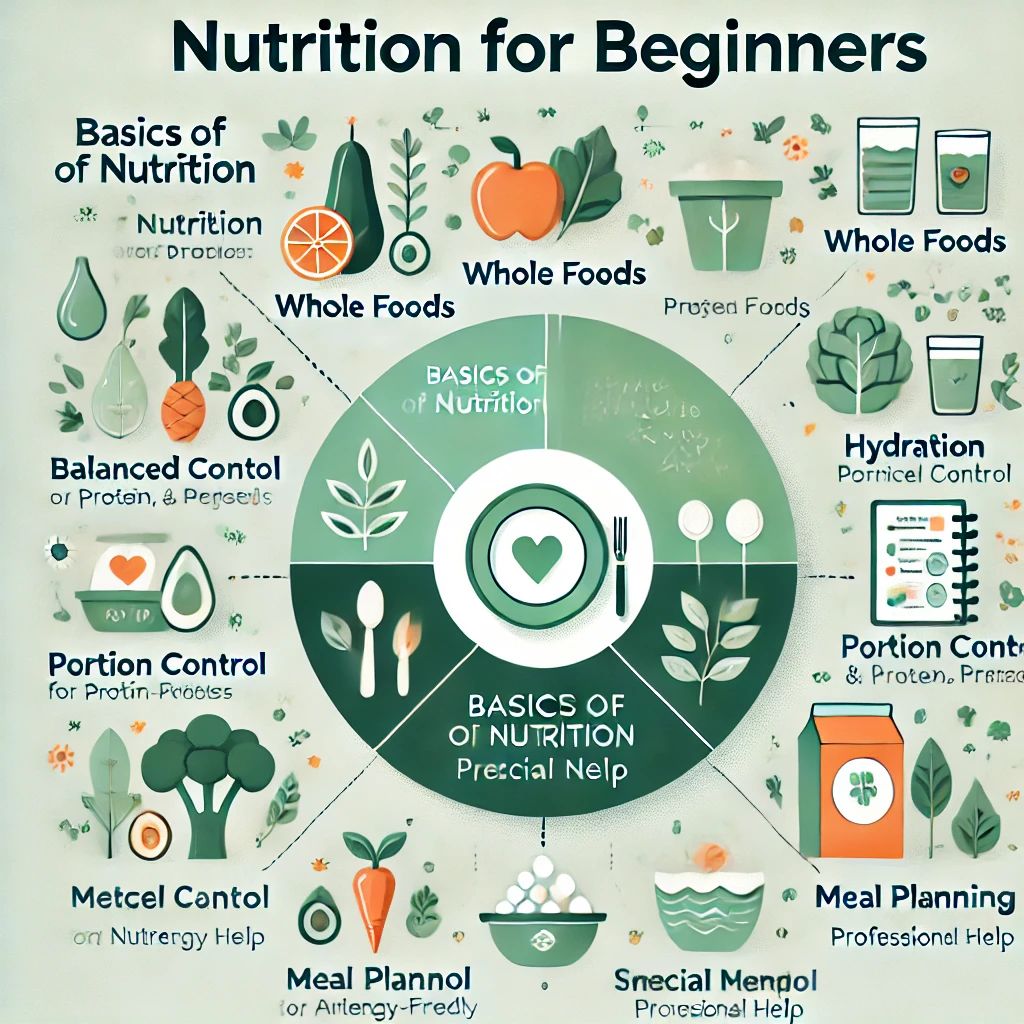
1. Understand the Basics of Nutrition
Macronutrients:
Protein: Builds and repairs muscles (e.g., chicken, fish, tofu, eggs).
Carbohydrates: Primary source of energy (e.g., rice, bread, fruits, vegetables).
Fats: Support hormone function and energy (e.g., avocados, nuts, olive oil).
Micronutrients:
Include vitamins and minerals found in fruits, vegetables, nuts, and whole grains.
—
2. Focus on Whole, Unprocessed Foods
Choose Whole Foods:
Opt for minimally processed foods like fresh produce, lean meats, and whole grains.
Limit Processed Foods:
Reduce intake of sugary snacks, fast food, and packaged items high in unhealthy fats and sugars.
—
3. Create a Balanced Plate
Follow the Harvard Healthy Eating Plate model:
Half the Plate: Vegetables and fruits (variety is key).
One-Quarter: Whole grains (e.g., quinoa, brown rice, whole-grain bread).
One-Quarter: Protein (e.g., fish, chicken, beans, or tofu).
—
4. Stay Hydrated
Aim for 8–10 glasses of water daily.
Limit sugary drinks like sodas and juices.
—
5. Practice Portion Control
Use smaller plates to control serving sizes.
Listen to your hunger and fullness cues to avoid overeating.
—
6. Plan Your Meals
Meal Prep:
Cook and portion meals ahead of time to avoid unhealthy choices.
Healthy Snacks:
Keep nuts, yogurt, fruits, or veggies on hand for quick, nutritious snacks.
—
7. Be Mindful of Special Nutritional Needs
Allergies: Avoid foods that trigger allergies or intolerances.
Dietary Preferences: Choose plant-based, low-carb, or other preferences based on your goals.
—
8. Monitor and Adjust
Keep a Food Journal:
Track what you eat to identify patterns and make improvements.
Start Small:
Focus on one or two changes at a time, like adding more veggies or reducing sugary snacks.
—
9. Avoid Fad Diets
Stick to balanced, sustainable eating habits instead of extreme diets that promise rapid results.
—
10. Seek Professional Guidance if Needed
A dietitian or nutritionist can help personalize a plan based on your health goals and medical history.
—
Would you like this guide tailored further, or perhaps an infographic to summarize it?
 Smartsfitness
Leave a comment