Squats vs. Leg Press: Which is Better for Your Goals?
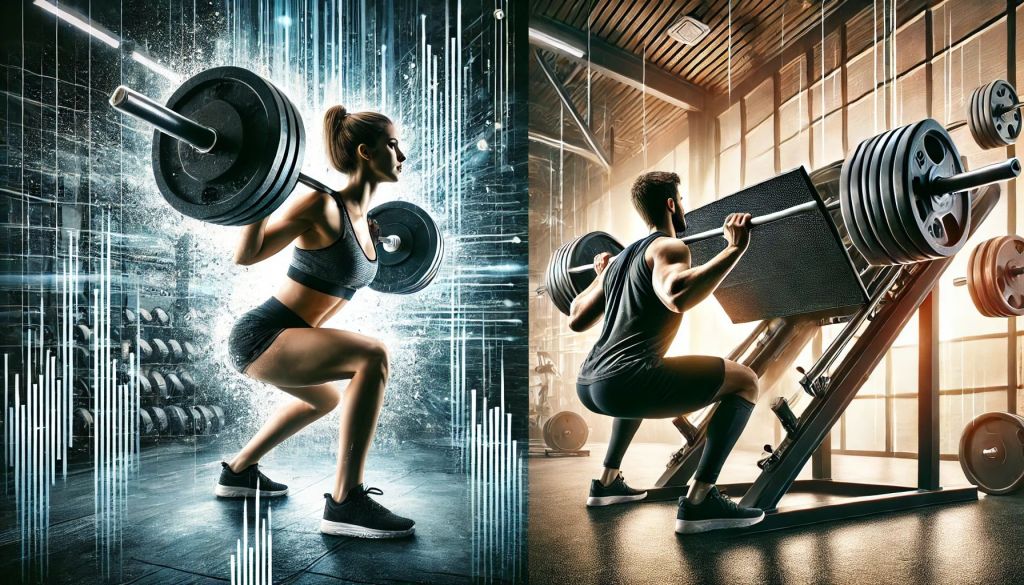
When it comes to building strong, muscular legs, squats and the leg press are two staple exercises. Both target similar muscle groups, including the quadriceps, hamstrings, glutes, and calves. However, they differ in mechanics, muscle activation, and benefits. So, which is better? The answer depends on your goals, fitness level, and individual needs.
Squats: The King of Functional Strength
Squats are often hailed as the “king of exercises” due to their ability to engage multiple muscle groups and promote functional strength.
Benefits of Squats:
1. Full-Body Activation: Squats not only work your lower body but also engage your core, lower back, and even upper body for stabilization.
2. Functional Movement: Squats mimic real-life movements like sitting, standing, or lifting, improving daily functionality and athletic performance.
3. Greater Hormonal Response: They stimulate the release of anabolic hormones like testosterone and growth hormone, supporting overall muscle growth.
4. Scalable Exercise: Squats can be modified (e.g., goblet squats, Bulgarian split squats) or loaded (e.g., back squats, front squats) to suit any fitness level.
Drawbacks of Squats:
Technique-Dependent: Poor form can lead to injury, particularly in the lower back or knees.
High Demands on Mobility: Squats require good hip, ankle, and thoracic mobility.
Leg Press: Isolated Lower Body Power
The leg press is performed on a machine that allows you to push weight away from your body with your legs, minimizing the need for balance and stabilization.
Benefits of the Leg Press:
1. Beginner-Friendly: It’s easier to learn and perform compared to squats, making it ideal for those new to strength training.
2. Low Risk of Injury: The machine provides support for your back and reduces the risk of injury from poor form.
3. Targeted Muscle Work: It allows you to focus on your legs without engaging the core or upper body.
4. Load Capacity: Most people can lift heavier on the leg press compared to squats, making it a great tool for strength progression.
Drawbacks of the Leg Press:
Limited Functionality: The leg press doesn’t mimic everyday movements or athletic performance.
Less Core Engagement: It isolates the legs and doesn’t strengthen stabilizing muscles like the core or lower back.
Risk of Overloading: Overloading without proper control can stress the knees.
Which is Better?
It depends on your goals:
1. For Functional Strength & Athleticism: Squats are superior because they build full-body strength, improve balance, and mimic real-world movements.
2. For Muscle Isolation & Rehabilitation: The leg press is better for isolating the legs or for those recovering from an injury and unable to perform squats.
3. For Beginners: The leg press can help develop initial leg strength and confidence before progressing to squats.
4. For Maximum Leg Growth: Combining both in your routine can provide the best results. Squats build foundational strength, while the leg press allows you to target and overload the legs.
How to Incorporate Both
Beginners: Start with leg presses to build strength and confidence, then gradually incorporate bodyweight or goblet squats.
Intermediate/Advanced: Use squats as your primary lower-body movement and the leg press for accessory work. For example:
Day 1 (Strength): Barbell squats as the main lift, followed by leg press for volume.
Day 2 (Hypertrophy): Focus on higher reps with leg press and lighter squats for technique refinement.
Final Thoughts
Squats and leg presses both have their place in a well-rounded training program. While squats reign supreme for functional strength and overall athleticism, the leg press provides a controlled environment for isolating and building leg muscles. Assess your goals, fitness level, and preferences to determine which (or both) suits your routine best.
 Smartsfitness
Leave a comment